Quartz vs. Granite Countertops: Which Holds Up Better in a Busy Kitchen?
Quick Answer: In a busy kitchen, the honest answer is that neither wins outright. Granite handles heat far better and lets you set a hot pan down without much worry, but it is porous and needs sealing to fend off stains. Quartz is nonporous, so it never needs sealing and resists stains better, and it is slightly harder against scratches, but its resin binder means a hot pan can scorch it. Pick granite if you cook hot and hard and will reseal it periodically. Pick quartz if you want a surface you can ignore and never worry about wine, oil, or sealing.
The countertop takes more daily abuse than almost anything else in a kitchen. Hot pans off the stove, a knife that misses the cutting board, red wine at dinner, the coffee that spills before anyone has had any. In a house where the kitchen actually gets used, the question is not which stone looks best in the showroom. It is which one still looks right after ten years of real cooking.
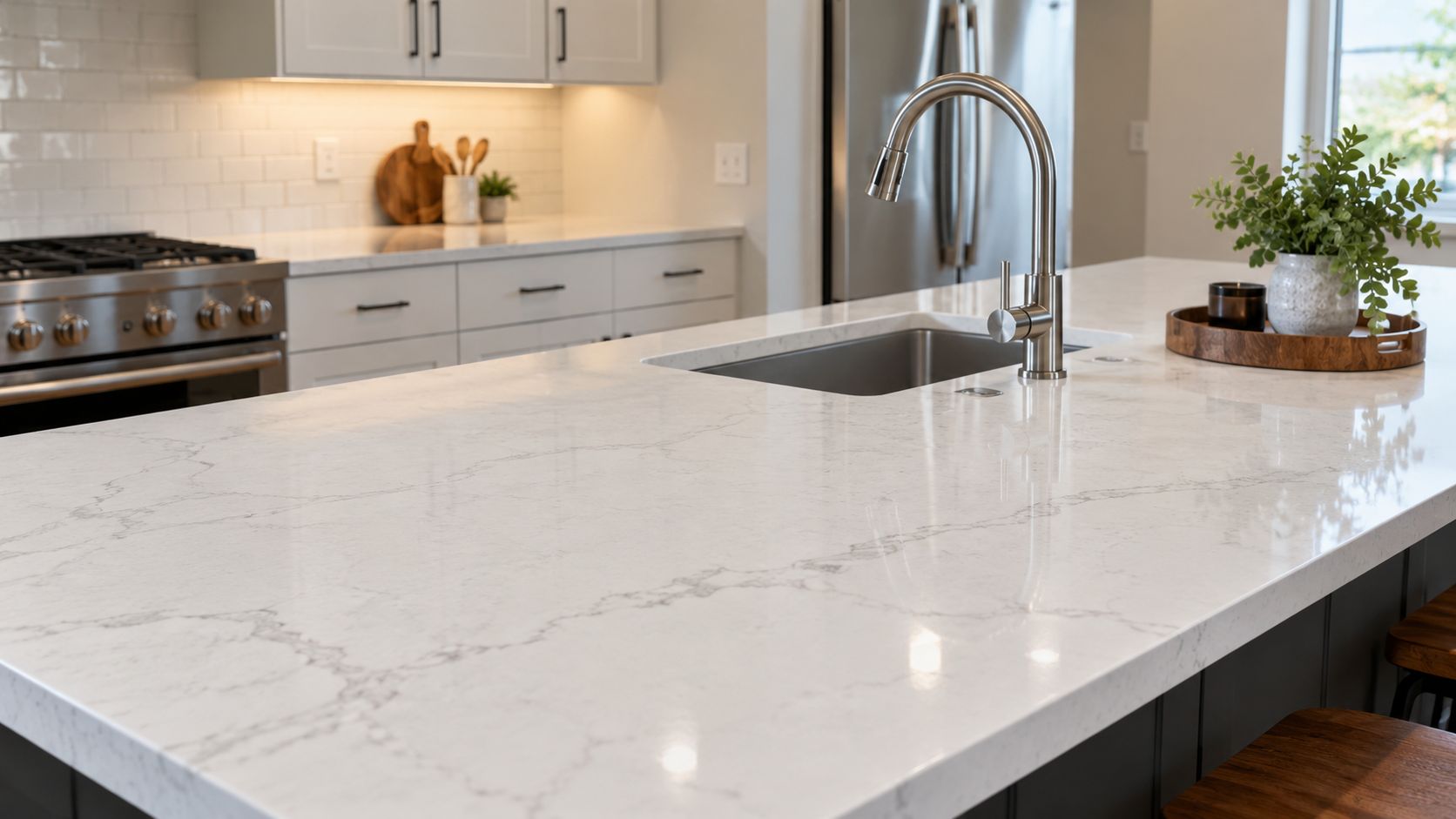
Around the Dayton area, quartz and granite are the two surfaces homeowners weigh against each other most often. Both are durable, both add value, and both will outlast a laminate top by decades. But they fail in different ways and shine in different ways, and the right choice depends less on the slab and more on how you cook. Here is how the two compare on the things that matter when a kitchen sees heavy use.
Hardness and Scratches: A Close Call, Slight Edge to Quartz
On the Mohs scale, which rates a mineral's resistance to scratching from 1 to 10, engineered quartz tests at about 7 consistently. Granite lands between 6 and 7 depending on how much softer feldspar it contains. That one point gap is small, but it means most kitchen knives, which sit around 5.5 to 6.5 on the same scale, can mark granite's softer pockets a little before they touch quartz.
In practice, both surfaces resist everyday scratching well, and both reward a cutting board. Granite is hard enough that a knife dragged across it is more likely to dull the blade than scar the stone. Quartz is uniform enough that when it does get scratched, the mark shows more, because there is no natural pattern to hide it. For a busy kitchen, treat both as scratch resistant rather than scratch proof and keep a cutting board on the counter either way.
Heat: Granite's Clear Win
This is the category where the two materials genuinely part ways. Granite is natural stone formed under heat and pressure, so it takes high temperatures in stride. You can set a hot pan on a granite counter without the surface discoloring or blistering. It is still smart to use a trivet, and a very hot pan on a very cold slab can risk thermal shock, but granite forgives the occasional careless moment.
Quartz does not. It is roughly 90 to 95 percent ground quartz held together with polymer resin, and that resin is the weak point. It begins to soften and discolor at heat well below what a pan off a burner puts out, with many manufacturers citing a limit around 150 degrees. A skillet straight off the stove can carry far more than that, and the result is a permanent scorch mark the resin will not release. If your cooking involves a lot of hot cookware moving fast, granite is the more forgiving surface by a wide margin.
TIP: If you love the look of quartz but cook at high heat, plan a landing zone. A stretch of butcher block or a couple of trivets kept permanently by the stove gives hot pans a safe place to go, so the quartz never takes the hit.
Stains and Sealing: Quartz's Clear Win
Granite is porous. Left unsealed, it will absorb liquids, and a spill like red wine, oil, or something acidic can soak in and leave a mark that does not wipe away. That is why granite needs sealing, traditionally about once a year, though many slabs today come with a factory applied sealer that stretches the interval. Sealing is a simple job, but it is a job, and skipping it is how granite ends up stained.
Quartz asks for none of that. Because it is nonporous, it never needs sealing, and spills sit on top of the surface instead of soaking in. Wine, coffee, oil, and acidic foods wipe up without leaving a shadow, and the nonporous surface gives bacteria nowhere to settle either. For a kitchen where spills happen daily and nobody wants to think about maintenance, quartz is the lower effort surface.
One Quiet Caveat With Quartz: Strong Sun
Over years of direct sunlight, some quartz can fade or discolor near a big window. Granite does not have that issue. If a run of counter sits in constant afternoon light, it is worth raising with your fabricator before choosing.
A Smaller Point In Granite's Favor: Seams
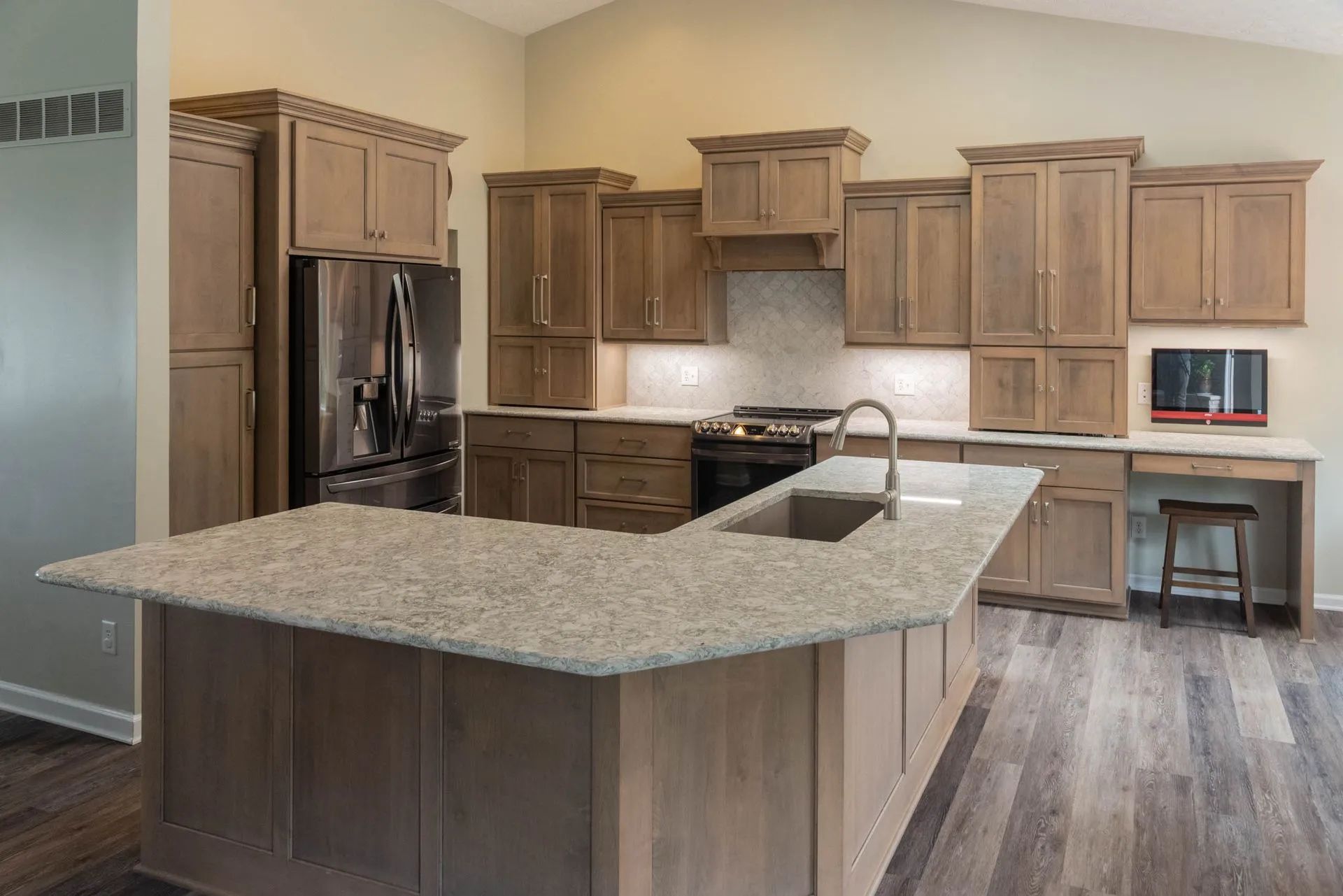
In a typical kitchen layout, granite often needs fewer visible seams than quartz across the same run of counter, and a large island can sometimes be done in a single piece. On an L or U shaped kitchen, expect a seam wherever the counter changes direction with either material. A skilled fabricator disguises seams with color matched epoxy, but if a long uninterrupted surface matters to you, it is worth asking how many seams each slab will require.
Cost: Overlapping Ranges, Not a Clean Gap
Price is not a reliable tiebreaker, because the ranges overlap heavily. Quartz commonly runs about 80 to 180 dollars per square foot installed, and granite runs about 75 to 200 dollars. A base quartz often costs a few dollars per square foot more than a base granite, but a rare granite slab with unusual color or figure can climb well past a standard quartz. You can find both materials at nearly every price level, so budget usually narrows the options within a material more than it decides between the two.
WARNING: Be cautious with very cheap quartz. Lower cost quartz is often made with lower quality resin, which makes it more prone to staining, scratching, and heat damage than better engineered slabs. If quartz is the choice, the resin quality matters as much as the color.
So Which One for a Busy Kitchen?
It comes down to how you cook and how much maintenance you will actually do.
Granite Fits The Serious, Hot Cook
If your kitchen sees cast iron, big pots, and pans moving straight from a burner to the counter, granite's heat tolerance is worth a lot. The trade is that you commit to sealing it periodically to keep stains out. For someone who cooks hard and does not mind that small upkeep, granite holds up beautifully.
Quartz Fits The Low Maintenance Household
If you want a surface that never needs sealing, shrugs off wine and oil, and stays uniform for years with nothing more than a wipe down, quartz is the easier daily companion. The catch is discipline with hot cookware, since a scorch is permanent. For families who value convenience and are willing to keep trivets handy, quartz is the lower effort choice.
Both are excellent surfaces. The mistake is picking on looks alone and then discovering the maintenance style does not match the household. Choose for how the kitchen actually gets used, and either stone will serve for decades.
Frequently Asked Questions
Is quartz or granite better for a busy kitchen?
Both work well, but for different cooks. Granite is better if you set hot pans down often and will reseal periodically. Quartz is better if you want a nonporous, no sealing surface that resists stains, as long as you use trivets to protect it from heat.
Does granite really need to be sealed every year?
Traditionally yes, because granite is porous and unsealed stone can absorb stains. Many modern slabs come with a factory sealer that extends the interval, but sealing on a schedule is still what keeps granite stain free over the long run.
Can you put a hot pan on quartz countertops?
It is risky. Quartz resin can begin to soften and discolor at temperatures around 150 degrees, and a pan off the stove runs far hotter. A hot pan can leave a permanent scorch, so always use a trivet or hot pad on quartz.
Which scratches more easily, quartz or granite?
Quartz is slightly harder, testing around 7 on the Mohs scale versus granite's 6 to 7, so granite's softer areas can scratch a little sooner. Both resist everyday wear well, and both last longer if you use a cutting board rather than cutting on the stone.
Is quartz more expensive than granite?
Not always. Quartz runs roughly 80 to 180 dollars per square foot installed and granite about 75 to 200, so the ranges overlap. A base quartz often costs slightly more than a base granite, but rare granite can exceed standard quartz.
Matching the Stone to the Way You Cook
The quartz versus granite debate does not have a universal winner, and any showroom that tells you otherwise is selling, not advising. Granite wins on heat and gives a natural, one of a kind look, at the cost of periodic sealing. Quartz wins on stain resistance and low maintenance, at the cost of vulnerability to hot pans. The right answer is the one that fits your kitchen's real habits.
With 45
years of building kitchens across the Greater Dayton Area and Kettering, OH, and its neighboring communities, Classic Cabinets & Remodeling
has installed both surfaces in every kind of household, from light users to families who cook three meals a day. The
best countertop
is not the hardest or the priciest. It is the one whose strengths line up with how you live in the room. Seeing full slabs and talking through your cooking habits before you choose is the surest way to land on a countertop you are still happy with a decade from now.