Cabinet Refacing vs Full Replacement: How to Choose the Right Upgrade
The kitchen is the heart of any home, and cabinets are its backbone. When those cabinets start showing their age — worn finishes, outdated styles, or sagging doors — the question every homeowner faces is the same: do we reface or replace? This decision carries significant financial and practical weight, and making the wrong choice can cost thousands of dollars or result in a renovation that falls short of expectations. Cabinet refacing and full cabinet replacement are both legitimate solutions, but they serve very different needs. Understanding the distinction between the two is not just a matter of preference; it is a matter of aligning your investment with the actual condition of your cabinetry, your budget, and your long-term goals for the space.
With kitchen renovation costs continuing to rise across the country, homeowners and contractors alike are placing greater scrutiny on every line item in a remodeling budget. Cabinet-related work alone can account for 30 to 40 percent of a kitchen renovation's total cost, making it one of the most impactful decisions in the entire process. Whether you are a homeowner planning a kitchen refresh or a contractor advising clients, this guide provides a clear, expert-driven framework to evaluate both options — so you can choose the cabinet upgrade that delivers the best results for your specific situation.
Understanding the Two Options
What Is Cabinet Refacing?
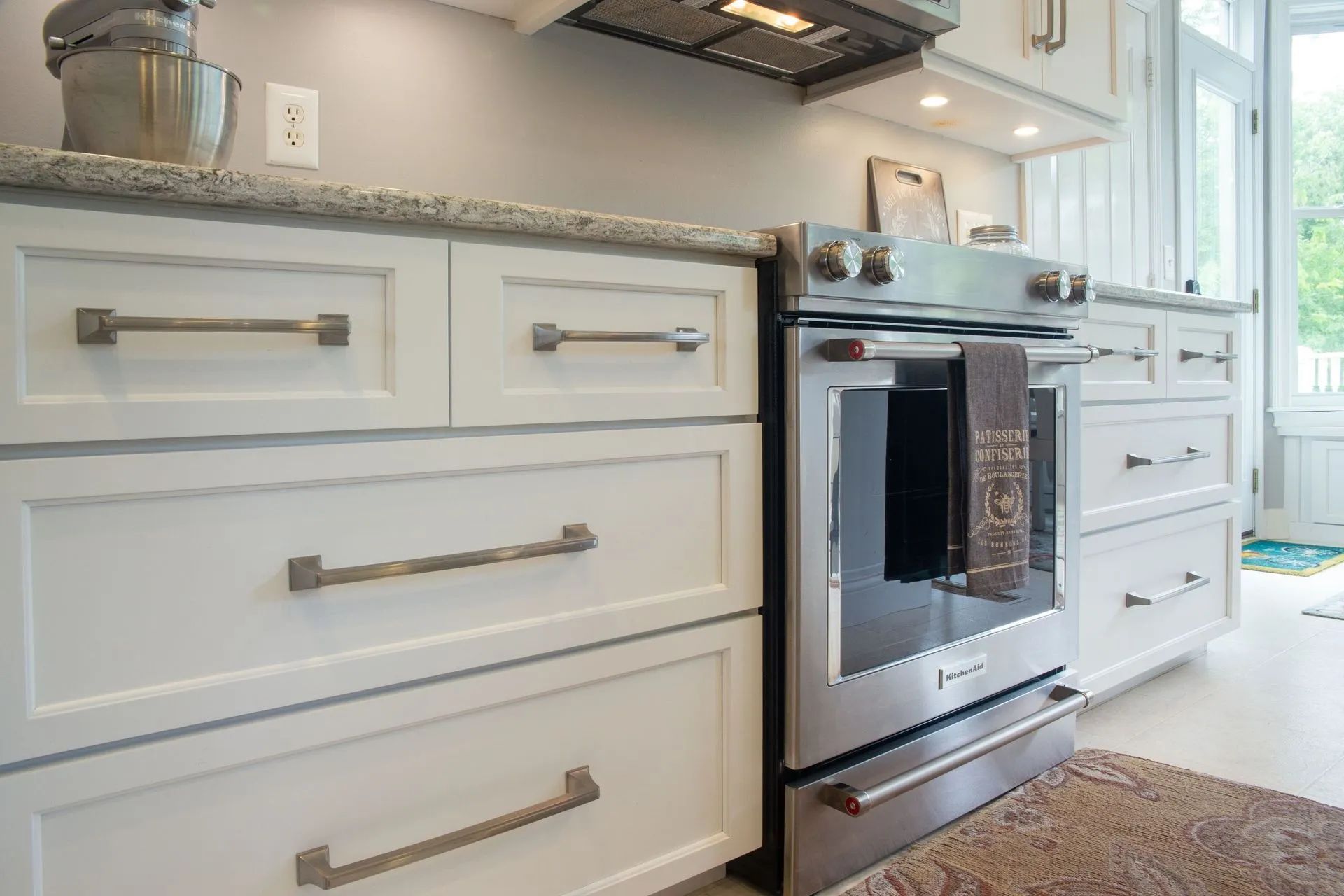
Cabinet refacing involves keeping the existing cabinet boxes — the structural frames — in place while replacing or covering all visible surfaces. This typically includes applying a new veneer or laminate to the cabinet frames, installing brand-new doors and drawer fronts, and updating hardware such as hinges, handles, and pulls. The interior of each cabinet remains unchanged. The process is largely cosmetic but can produce a dramatic transformation in a kitchen's appearance.
Because refacing preserves the existing framework, the timeline for completion is significantly shorter — often two to four days for an average kitchen — and the disruption to your daily routine is minimal. The cost savings compared to full replacement can range from 40 to 50 percent, making refacing an attractive option when the underlying cabinet boxes are structurally sound.
What Is Full Cabinet Replacement?
Full cabinet replacement means removing every existing cabinet — box, door, hardware, and all — and installing entirely new cabinetry from scratch. This approach gives you complete control over layout, materials, dimensions, and configuration. It is the only option when structural damage is present, when a layout change is needed, or when the existing cabinets have deteriorated beyond aesthetic repair.
Replacement projects take longer — typically one to three weeks — and cost substantially more, but they offer a true transformation that addresses both function and form. When done correctly, new cabinets can last 20 to 30 years, add measurable resale value to a property, and resolve spatial inefficiencies that refacing simply cannot touch.
Key Factors That Should Drive Your Decision
The Condition of Your Current Cabinet Boxes
This is the single most important factor in your decision. Cabinet refacing is only viable when the existing cabinet boxes are structurally intact. That means no warping, no water damage, no mold, and no rot. Before any refacing project begins, every cabinet box must be inspected thoroughly. If even a portion of the structure is compromised, refacing over it will not solve the problem — it will simply conceal it, leading to much larger and more expensive problems down the road.
A real-world scenario: a homeowner notices peeling veneer on their cabinet doors and assumes refacing is the solution. Upon closer inspection, the base cabinets under the sink have water damage and swelling from a slow leak. In this case, refacing would be a costly mistake. Replacement is the appropriate path. The condition of the boxes is non-negotiable — this assessment should always come first.
Your Budget and Return on Investment
Budget is often the deciding factor, but it should be viewed through the lens of return on investment rather than upfront cost alone. Refacing is the more affordable option in the short term, but if it needs to be repeated in a few years due to declining cabinet integrity, the cumulative cost may approach or exceed that of a full replacement.
Full replacement, while more expensive upfront, often delivers a stronger return in terms of home resale value. According to industry data, minor kitchen remodels — which include cabinet updates — consistently rank among the highest-returning renovation projects at resale. If you are planning to sell your home within five years, weigh both options against what buyers in your market expect from a renovated kitchen.
Layout Goals and Functional Needs
When the Layout Works — and When It Does Not
Cabinet refacing preserves your existing layout exactly as it is. If the configuration of your kitchen — the position of upper cabinets, base cabinets, pantry columns, and the relationship between the sink, stove, and refrigerator — is functional and efficient, then refacing is a perfectly logical choice. You are simply refreshing the aesthetic without altering the workflow.
However, if you have always struggled with insufficient storage, poor traffic flow, a cramped corner configuration, or a layout that simply does not suit how you use your kitchen, refacing will do nothing to resolve those issues. Full replacement is the only pathway to a redesigned layout. This is a critical functional consideration that goes beyond aesthetics and directly affects how comfortable and efficient your kitchen will be every single day.
Interior Storage and Hardware Considerations
Refacing does not change the interior dimensions of cabinets, the depth of shelving, or the placement of internal organizers. If your current cabinets lack features like pull-out shelves, lazy Susans, drawer dividers, or soft-close mechanisms, some of these can be retrofitted independently of refacing — but the core structure will remain the same.
Full replacement allows you to specify internal dimensions, choose cabinets built with modern storage solutions integrated from the factory, and even switch from framed to frameless construction for greater interior space. For homeowners who cook frequently, entertain regularly, or simply need more from their kitchen storage, replacement gives you the opportunity to design for those specific needs.
Aesthetic Goals and Material Quality
What Refacing Can and Cannot Achieve Visually
Modern cabinet refacing materials have improved significantly. High-quality wood veneers, thermofoil, and rigid laminate finishes can produce a look that is nearly indistinguishable from brand-new cabinetry when applied with precision. Door style choices are extensive — from shaker and raised panel to slab and glass-front — allowing for a genuine visual transformation even within the constraints of refacing.
That said, refacing cannot change the height or depth of cabinets, eliminate gaps caused by uneven walls, or produce the same premium look and feel as solid wood or high-end custom cabinetry. If your vision for the kitchen involves a high-end material upgrade — say, transitioning from basic laminate boxes to custom hardwood cabinetry with dovetail joints and furniture-grade finishes — only full replacement will get you there.
Matching Existing Finishes and Styles
One practical challenge with partial renovation projects is achieving a seamless match between old and new elements. If you are refacing kitchen cabinets while retaining a bathroom vanity or laundry room cabinetry from the same original set, matching finishes across different areas of the home becomes a coordination challenge. Full replacement allows for perfect consistency across the home if that is a design priority.
Timeline, Disruption, and Environmental Considerations
How Each Option Affects Your Daily Life
For families with young children, individuals working from home, or households that rely heavily on their kitchen every day, minimizing disruption is a real priority. Cabinet refacing typically requires only two to four days from start to finish, with no demolition, no dumpsters, and significantly less noise and dust than a full replacement project. Full replacement involves removing old cabinets entirely, which means the kitchen will be non-functional for a longer period.
Sustainability and Waste Reduction
From an environmental standpoint, cabinet refacing is the greener choice. By retaining existing cabinet boxes rather than sending them to a landfill, refacing reduces construction waste significantly. For homeowners who prioritize sustainable renovation practices, this is a meaningful advantage. Full replacement generates considerably more waste, though choosing cabinets from certified sustainable wood sources and manufacturers with responsible disposal programs can offset some of this environmental impact.
Your Trusted Partner for Every Cabinet Upgrade Decision
Choosing between cabinet refacing and full replacement is ultimately a decision rooted in honest assessment — of your cabinet's structural condition, your budget, your layout needs, your aesthetic goals, and your timeline. Refacing delivers excellent value and a refreshed appearance when the underlying framework is solid and the layout serves your needs. Full replacement is the right move when structural damage is present, when you need a different configuration, or when your vision for the space demands more than surface-level changes can offer. Neither option is universally superior. The right upgrade is the one that aligns with your specific circumstances and delivers lasting satisfaction.
At Classic Cabinets & Remodeling, we bring over 45
years of hands-on experience to every cabinet project we undertake in Oakwood and the surrounding communities. We have helped thousands of homeowners navigate exactly this decision — refacing or replacing — and we approach each project with a commitment to honesty, craftsmanship, and results that stand the test of time. Our process begins with a thorough evaluation of your existing cabinetry, not a sales pitch. When you work with us, you are not just getting new cabinets — you are getting a trusted partner who has seen it all and knows how to deliver results that genuinely transform your kitchen. We invite you to reach out and discover how our experience can serve your home.